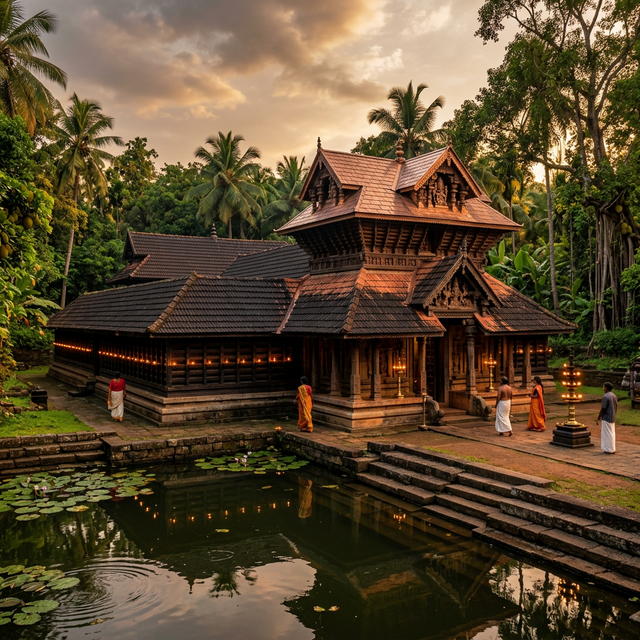
Ancient temple architecture of Kumbalangad

History of Kumbalangad

From ancient kingdoms to a thriving modern community โ€” a journey through time

Ancient temple in Kumbalangad region

Early History

Kingdom of Cochin Era

The region around Kumbalangad historically belonged to the Kingdom of Cochin (Perumpadappu Swarupam), which ruled much of central Kerala for centuries before the advent of British colonial rule. The kingdom was known for its patronage of arts, trade, and temple culture.

Kumbalangad, like many villages in the Thrissur region, was part of a traditional agrarian society where life revolved around paddy cultivation, river-based settlements, and temple-centered communities. Farmers cultivated rice in the fertile alluvial plains, while coconut and arecanut plantations provided supplementary income.

The village's social structure was deeply tied to its temples, which served not just as places of worship but as centers of community governance, cultural activities, and religious education.
Timeline of Kumbalangad

Key milestones that shaped our village

Pre-16th Century

Ancient Beginnings

Early settlements form along river banks. Paddy cultivation begins. Communities organize around local temples. The region comes under the Kingdom of Cochin's influence.

17thโ€“18th Century

Temple Culture Flourishes

The Pallimanna Shiva Temple gains prominence with the creation of exquisite mural paintings. Temple art, architecture, and regional festivals become central to village life. Artisan communities thrive.

18thโ€“19th Century

Colonial Period

British colonial rule brings administrative changes. Traditional land ownership systems evolve. Despite external influences, the village maintains its cultural identity through temple traditions and local governance.

1947

Indian Independence

With India's Independence and the formation of Kerala state in 1956, the village sees new administrative structures, land reforms, and development initiatives that modernize rural life.

Late 20th Century

Modern Development

Roads, schools, and healthcare facilities are established. The growth of nearby Wadakkanchery town brings economic opportunities. Education becomes accessible to all sections of society.

2015

Wadakkanchery Municipality

The formation of Wadakkanchery Municipality accelerates development in nearby areas including Kumbalangad. Improved infrastructure, civic amenities, and urban-rural connectivity transform the region.

Present Day

Heritage & Progress

Kumbalangad today is a harmonious blend of ancient heritage and modern progress. The village preserves its temples, traditions, and community bonds while embracing education, technology, and sustainable development.

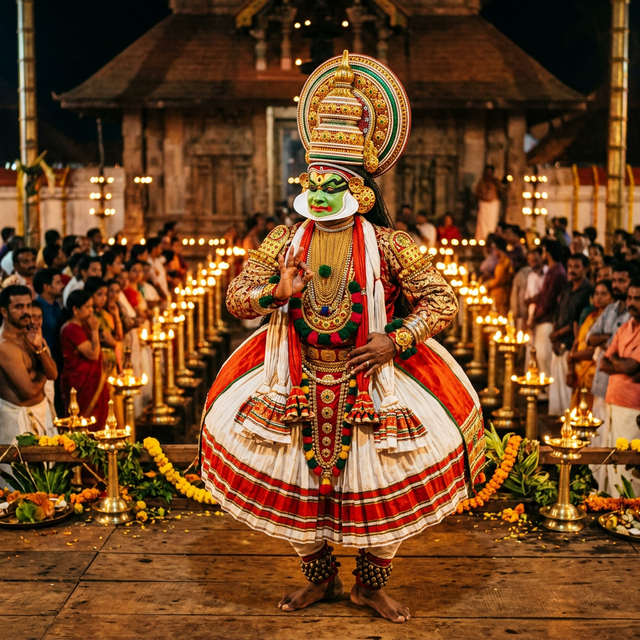
Cultural arts of Kumbalangad

Cultural Development

Arts, Festivals & Community

Over centuries, Kumbalangad evolved into a vibrant center of Kerala's cultural traditions. The village's cultural life was nurtured by its temple culture, which sponsored classical arts like Kathakali, Mohiniyattam, and temple percussion ensembles (Chenda Melam).

Local festivals became grand community celebrations, bringing together people from all walks of life. The annual temple festivals featured elaborate processions, traditional music, and ritual performances that continue to this day.

The village's artisan communities โ€” including wood carvers, mural painters, brass workers, and weavers โ€” contributed to a rich tradition of craftsmanship that adorned temples and homes throughout the region.

Modern Development

Growth and transformation after Indian Independence

๐Ÿ—๏ธ

Infrastructure Growth

Post-independence, the region saw significant development in roads, electricity, water supply, and telecommunications. The NH 544 connecting Thrissur brings connectivity to the village.

๐Ÿ“š

Education Revolution

Kerala's renowned focus on education transformed villages like Kumbalangad. Schools and libraries became accessible to all, achieving near-universal literacy rates.

๐Ÿ›๏ธ

Municipal Formation

The formation of Wadakkanchery Municipality in 2015 accelerated development in the surrounding areas including Kumbalangad, bringing improved civic amenities and urban planning.

๐ŸŒพ

Agricultural Modernization

While preserving traditional farming methods, modern techniques and diversified crops have improved agricultural productivity and farmers' livelihoods.

๐Ÿฅ

Healthcare Access

Primary health centers, government hospitals in Wadakkanchery, and private clinics ensure healthcare is accessible to all residents of the village.

๐Ÿค

Community Spirit

Despite modernization, Kumbalangad maintains its strong community bonds through temple committees, cultural organizations, and neighborhood self-help groups.